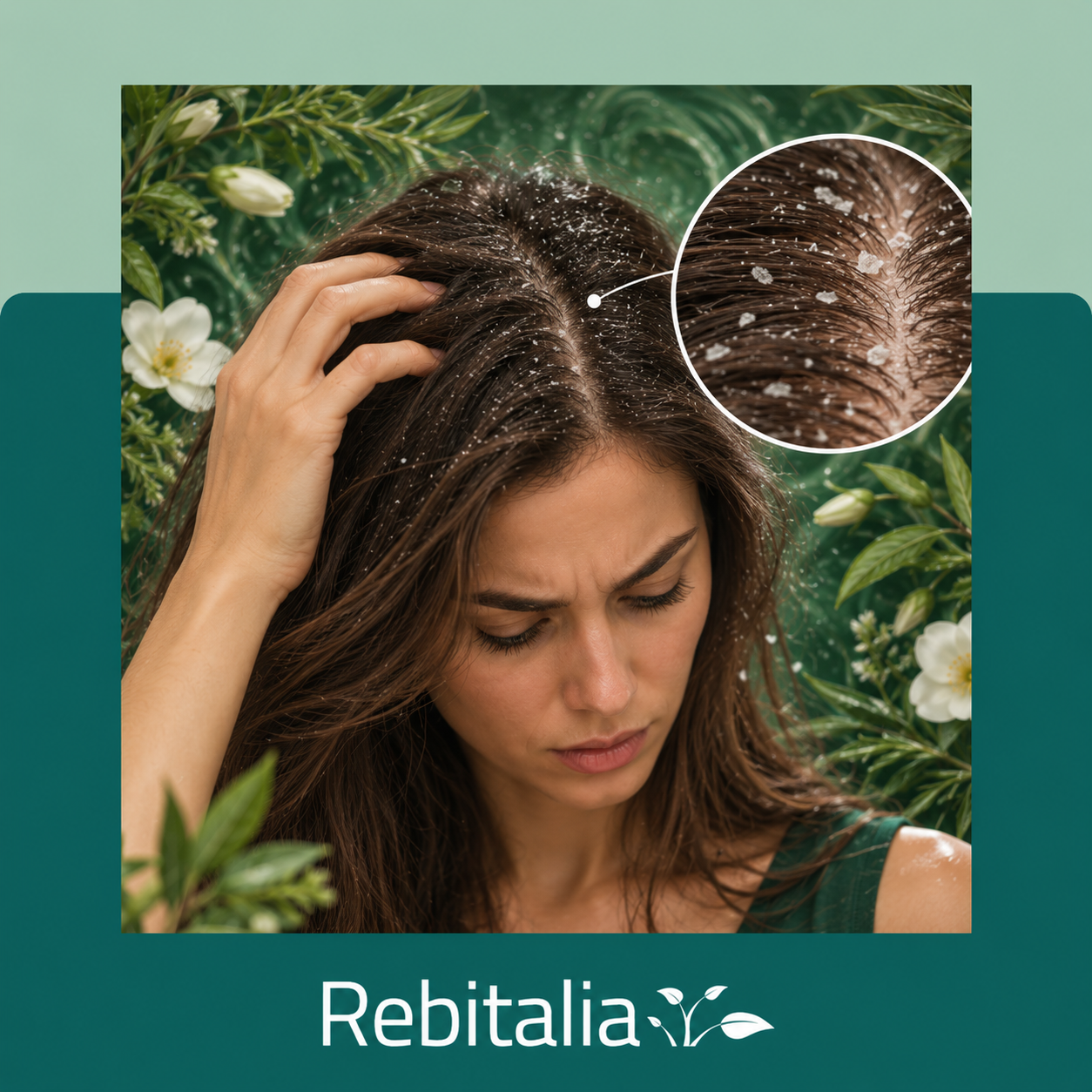
Dandruff, also known as pityriasis capitis simplex, is a very common scalp condition characterised by the formation of white or greyish flakes that are visible among the hair and often on clothing. It is more common between the ages of 10 and 25, often becomes less pronounced in adulthood and may decrease after the age of 45–55, although in some cases it can persist for longer.
At the root of the process is a change in the normal cycle of cell renewal: cells in the scalp epidermis renew too quickly and do not have enough time to complete their maturation. This leads to the formation of immature corneocytes that cluster into small flakes and detach easily from the scalp.
How dandruff forms and what happens on the scalp
Under normal conditions, the scalp maintains a balance between cell production and shedding. With dandruff, this balance is disrupted: epidermal cell migration speeds up and the process of keratinisation remains incomplete.
The resulting flakes may be widespread or appear in patches and are often accompanied by mild itching. At the same time, changes in the skin microbiota—the community of microorganisms naturally present on the skin—are frequently observed, further altering the scalp environment.
One microorganism commonly found in higher amounts in dandruff-prone areas is the yeast Pityrosporum ovalis, now known as Malassezia. However, it is not always clear whether it is a direct cause or whether it simply proliferates more readily in a scalp environment that is already out of balance.
Types of dandruff
Dandruff can appear in three main forms.
- Dry or simple pityriasis is characterised by small, fine flakes that detach easily from a generally normal or dry scalp. Itching is usually mild, and the flakes fall readily onto the hair and clothing.
- Oily or steatoid pityriasis presents with larger, greasy yellowish flakes that adhere to the scalp and are often associated with seborrhoea and mild redness.
- The most common form is mixed pityriasis, which combines features of the two previous types: medium-sized white-yellow flakes associated with a scalp showing excess sebum and perspiration.
Why dandruff appears
The causes of dandruff are multifactorial. Alongside altered cell turnover and the presence of Malassezia, internal factors are also often considered, including imbalances affecting the digestive system and conditions linked to the nervous system and stress.
What these situations generally have in common is a disruption of skin balance, which can make the scalp more reactive and less stable in its barrier function.
How to manage dandruff: balance and consistency
Managing dandruff does not mean treating the scalp aggressively, but rather helping restore scalp balance. An effective routine starts with appropriate cleansing that removes impurities and flakes without compromising the skin barrier.
It is important to avoid overly degreasing or harsh treatments, which may worsen flaking and increase scalp sensitivity. At the same time, the scalp should be kept balanced by controlling excess sebum, build-up and irritation.
Consistency is essential, as dandruff tends to be a recurring condition that requires ongoing care.
The role of products in a daily routine
For dandruff-prone scalps, Rebitalia offers targeted trichological solutions such as the BIO Natural Pityremove line, developed to support scalp balance and progressively improve flaking. Examples include the Pityremove purifying and normalising anti-dandruff shampoo and the anti-dandruff shampoo with zinc and sulphur for persistent oily dandruff.
The formulas are designed with a balancing and purifying approach, helping reduce visible flakes, regulate excess sebum and improve scalp comfort. The aim is not only to address the visible signs, but also to support a healthier scalp environment.
Used consistently, treatments such as the anti-dandruff lotion with rosemary, thyme and lavender help keep the scalp feeling cleaner, more even and balanced over time.
This article is based on information from Claudio Soglia’s manual, Trichology and Cosmetology.